
Turkey Guided Vacations & Destination Guide
Turkey is a transcontinental nation that bridges Europe and Asia, occupying a strategic position at the crossroads of civilizations. With its largest city, Istanbul, straddling the Bosphorus Strait between two continents, Turkey embodies a unique blend of Eastern and Western influences that have shaped its culture, architecture, and identity over millennia.
The country boasts a rich historical tapestry, having served as the heartland of powerful empires including the Byzantine and Ottoman Empires. This legacy is visible everywhere—from the stunning Hagia Sophia and Blue Mosque in Istanbul to the ancient ruins of Ephesus and the otherworldly landscapes of Cappadocia. Turkey’s archaeological sites span thousands of years, offering glimpses into Hittite, Greek, Roman, and Islamic civilizations.
Turkish culture is renowned for its warm hospitality, flavorful cuisine—featuring dishes like kebabs, baklava, and Turkish coffee—and vibrant traditions in music, literature, and the arts. The country continues to play a significant role in regional politics and serves as a crucial bridge between East and West.
When is the Best Time to Visit Turkey?
Turkey is great to visit during different seasons depending on what activities you are interested in doing.
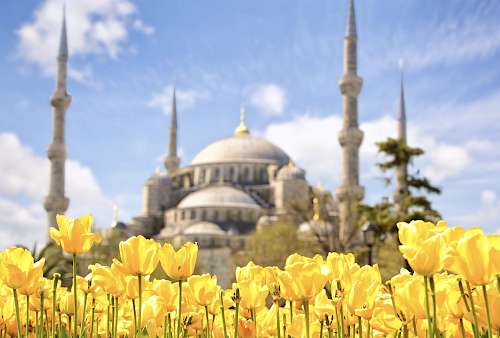 Spring (April-May) is often considered the best overall time. You’ll find pleasant temperatures (60-75°F), wildflowers in bloom, fewer crowds than summer, and reasonable prices. It’s ideal for exploring Istanbul, Cappadocia, and the ancient ruins.
Fall (September-October) is similarly excellent - warm but not hot, the summer crowds have thinned out, and the Mediterranean is still warm enough for swimming. Prices drop after the peak season ends.
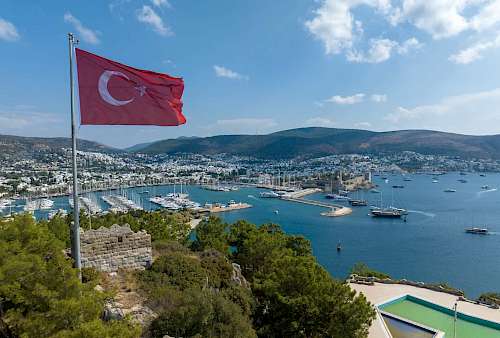 Summer (June-August) is perfect if you’re focused on beach destinations along the Aegean or Mediterranean coasts, though Istanbul and inland areas like Cappadocia can get quite hot. This is peak tourist season, so expect crowds and higher prices.
Winter (November-March) is low season with the cheapest prices and fewest tourists. While coastal areas can be rainy and chilly, it’s still pleasant for exploring Istanbul’s indoor attractions (mosques, palaces, bazaars).
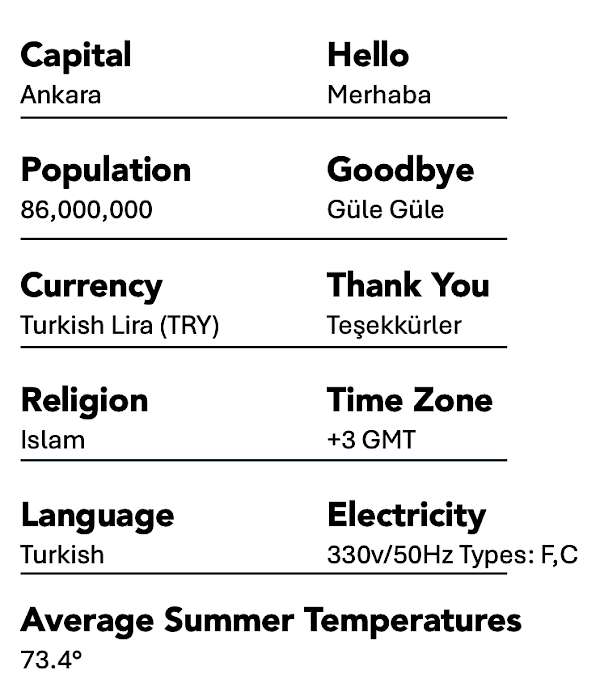
Turkey Facts
Be ready for your next trip to Turkey with some simple facts that will help you the moment you arrive. From population to religion, be in the know before you go.