
Birds of the Amazon Rainforest
The 12 Exotic Birds of the Amazon Rainforest
The Amazon Rainforest is not only the world’s largest tropical rainforest but also one of the richest ecosystems on Earth. Among its greatest natural treasures are over 1,900 species of birds, each more vibrant and unique than the last. From majestic eagles to charismatic toucans, the birdlife in the Amazon is a true spectacle for both amateur and experienced birdwatchers.
If you are dreaming of an trip which includes an ornithological escape, consider a trip with Tours of Distinction where you will enter a world of wings, colors, and song like nowhere else on earth. Here is our list of the most iconic and beautiful birds to spot in the Amazon.
1) The Harpy Eagle: Nature’s Predator
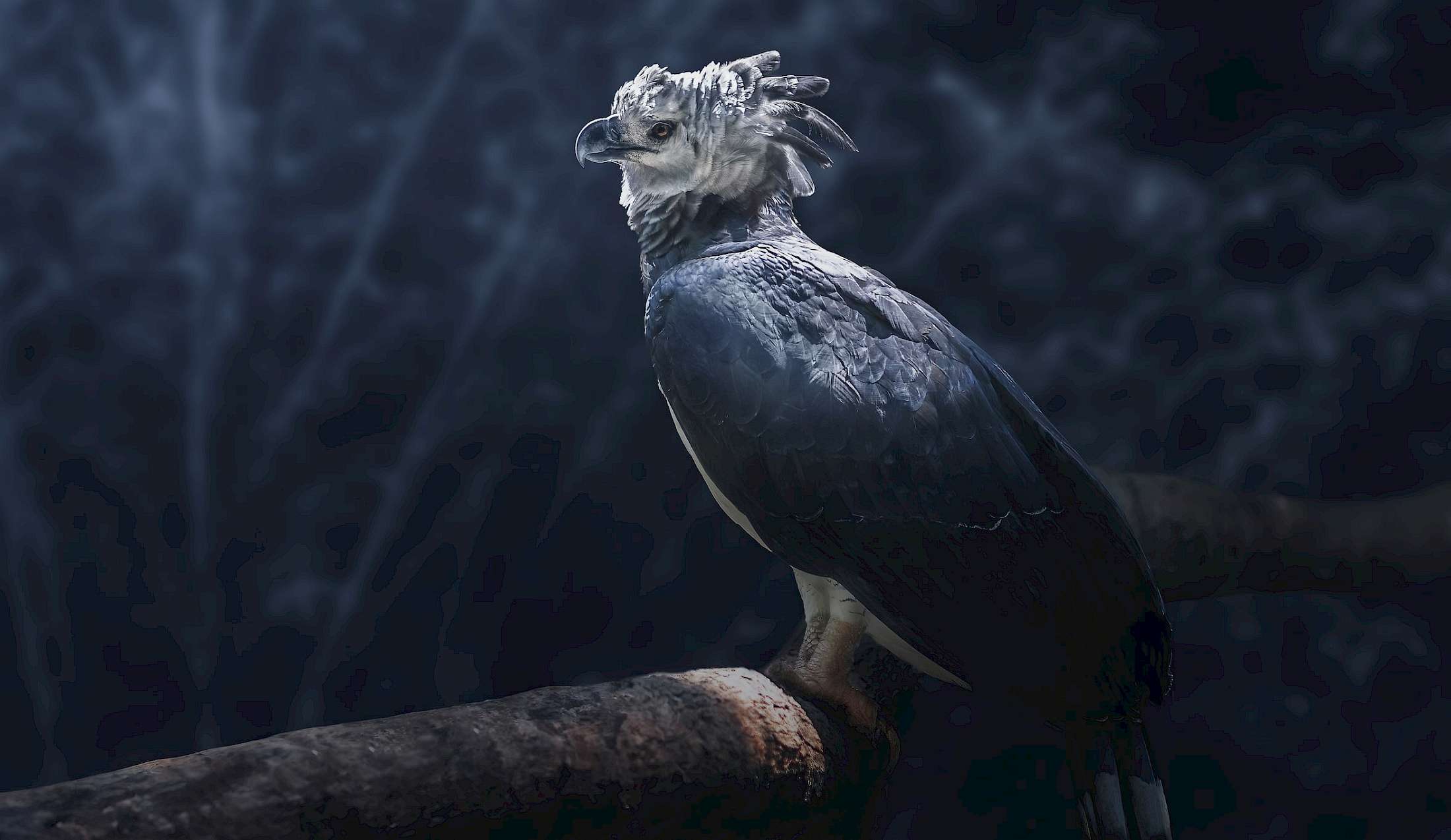
With a wingspan stretching up to 7.5 feet and weighing nearly 20 pounds, the Harpy Eagle (Harpia harpyja) reigns supreme as one of the world’s largest and most powerful birds of prey. These majestic raptors rule the rainforest canopy, swooping silently between the trees to pluck monkeys, sloths, and other mammals with their razor-sharp talons. Sporting dramatic black-and-white plumage and a signature double crest, the Harpy Eagle is instantly unforgettable. Catching a glimpse of one in the wild is a true bucket-list moment—a breathtaking encounter that few are lucky enough to experience.
2) The Scarlet Macaw: A Burst of Color and Intelligence
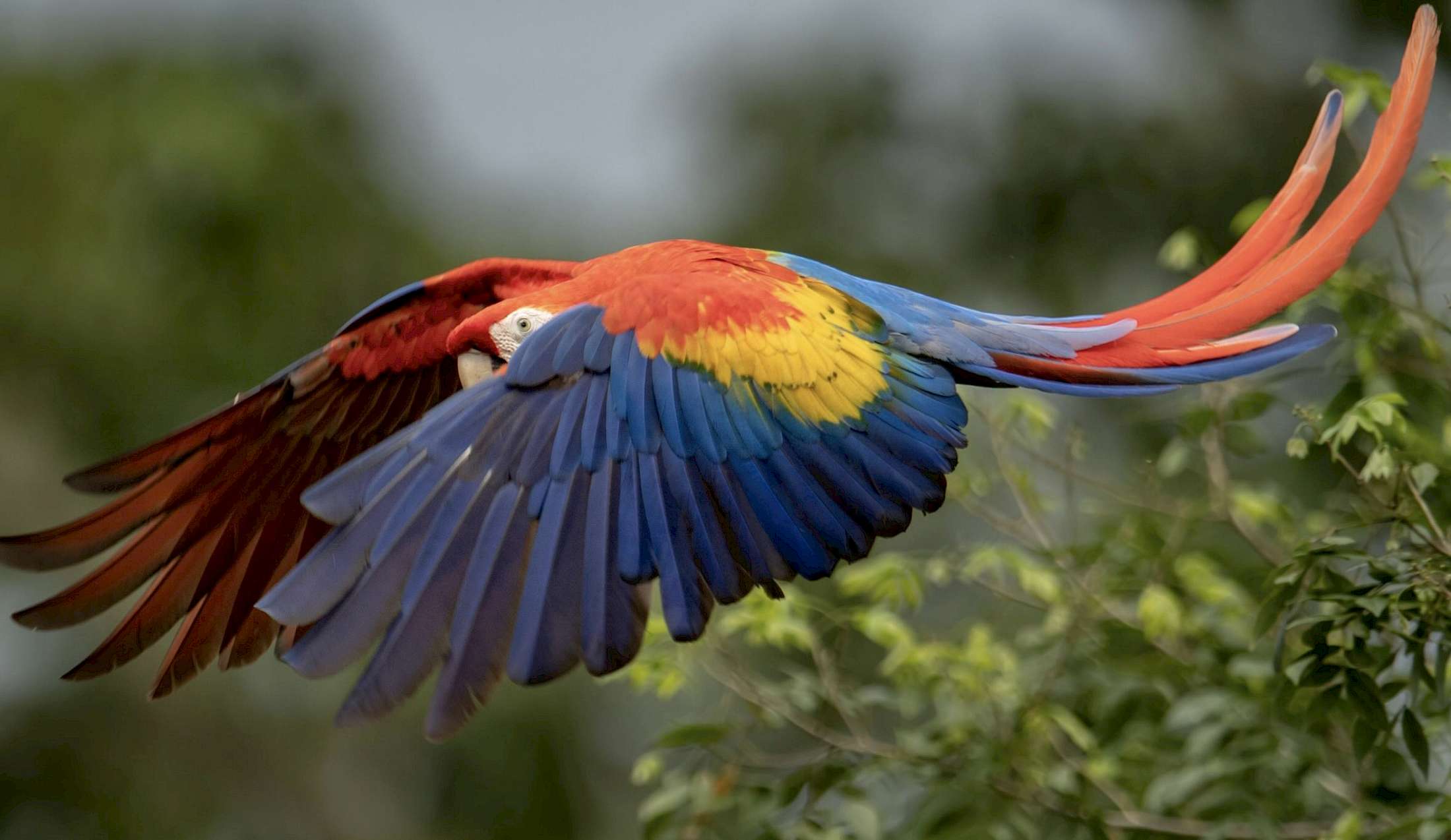
The Scarlet Macaw (Ara macao) is one of the world’s most colorful parrots, with bright red feathers and striking blue and yellow wings. Found from southern Mexico through Central America and deep into the Amazon, these birds are a symbol of the rainforest’s rich wildlife. Scarlet Macaws usually stay with one partner for life, often seen flying in pairs or small groups. Their loud calls help them communicate and stay together in the dense forest. Smart and curious, they can learn tricks, solve puzzles, and even mimic human speech in captivity! With strong beaks, they crack open tough nuts and help spread seeds, playing an important role in keeping the forest healthy. Scarlet Macaws can live 40 to 50 years in the wild, and up to 75 years with good care in captivity.
3) The Hoatzin: Nature’s Oddballs
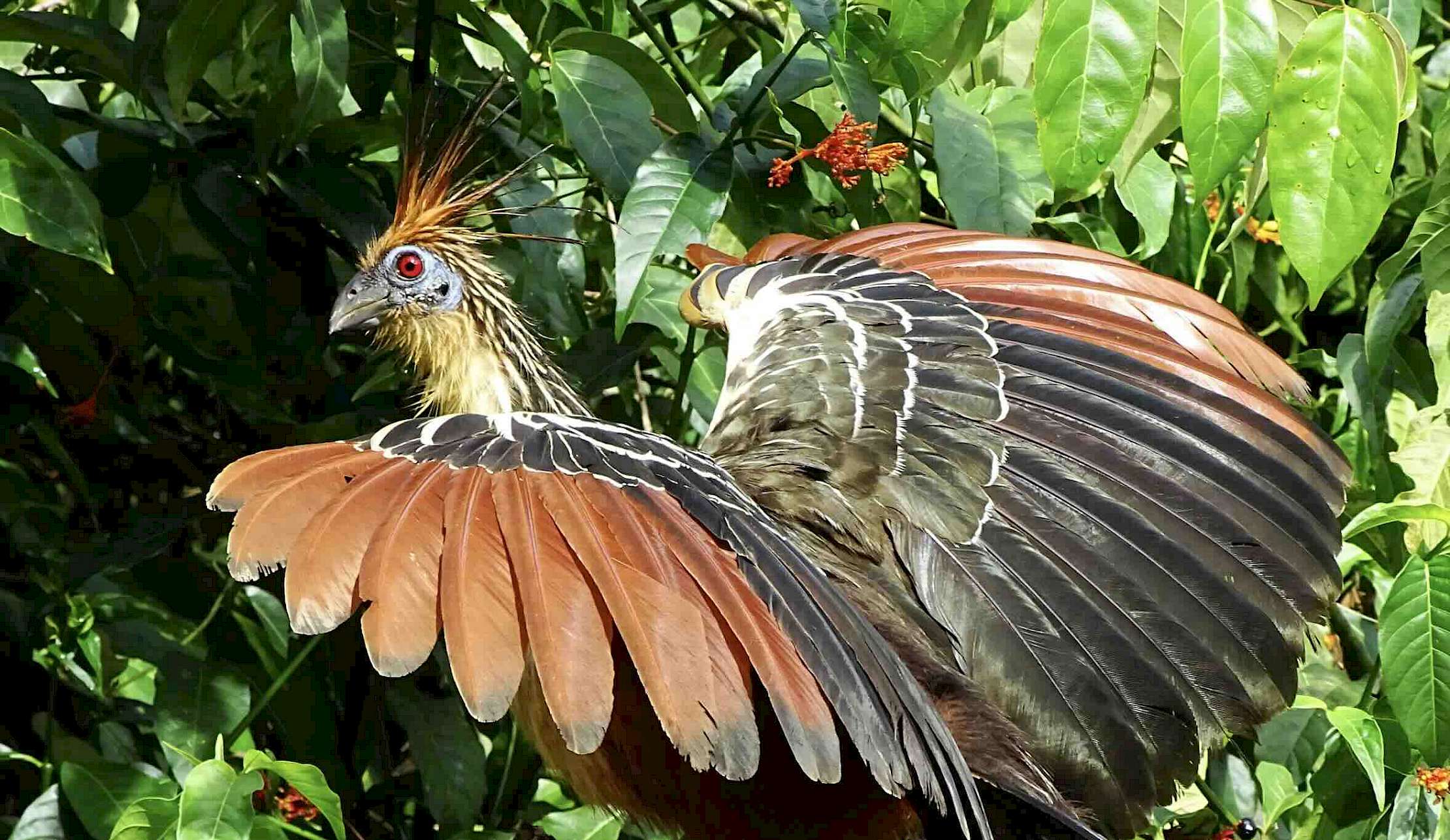
The Hoatzin (Opisthocomus hoazin) is one of nature’s true oddballs! Scientists still can’t agree on where it fits in the bird family tree—it’s unlike any other bird alive today. Genetic research shows it branched off from other birds about 64 million years ago, just after the dinosaurs disappeared.The Hoatzin is famous for its unusual way of eating. It digests leaves using bacteria in its large esophagus, much like cows do, which gives it a strong, manure-like smell and the nickname “stinkbird.” Because its digestive system takes up so much space, the Hoatzin can’t fly well. Young Hoatzins are born with two claws on each wing. They use these to climb branches and, if threatened, will drop into the water and swim to safety—then climb back up! This clawed feature is reminiscent of the prehistoric bird-dinosaur link, Archaeopteryx You’ll find Hoatzins in the Amazon Basin, living in groups along swampy riverbanks. They’re social birds, often seen lounging in communal groups and digesting for hours.
4) Amazonian Royal Flycatcher: A Showstopper
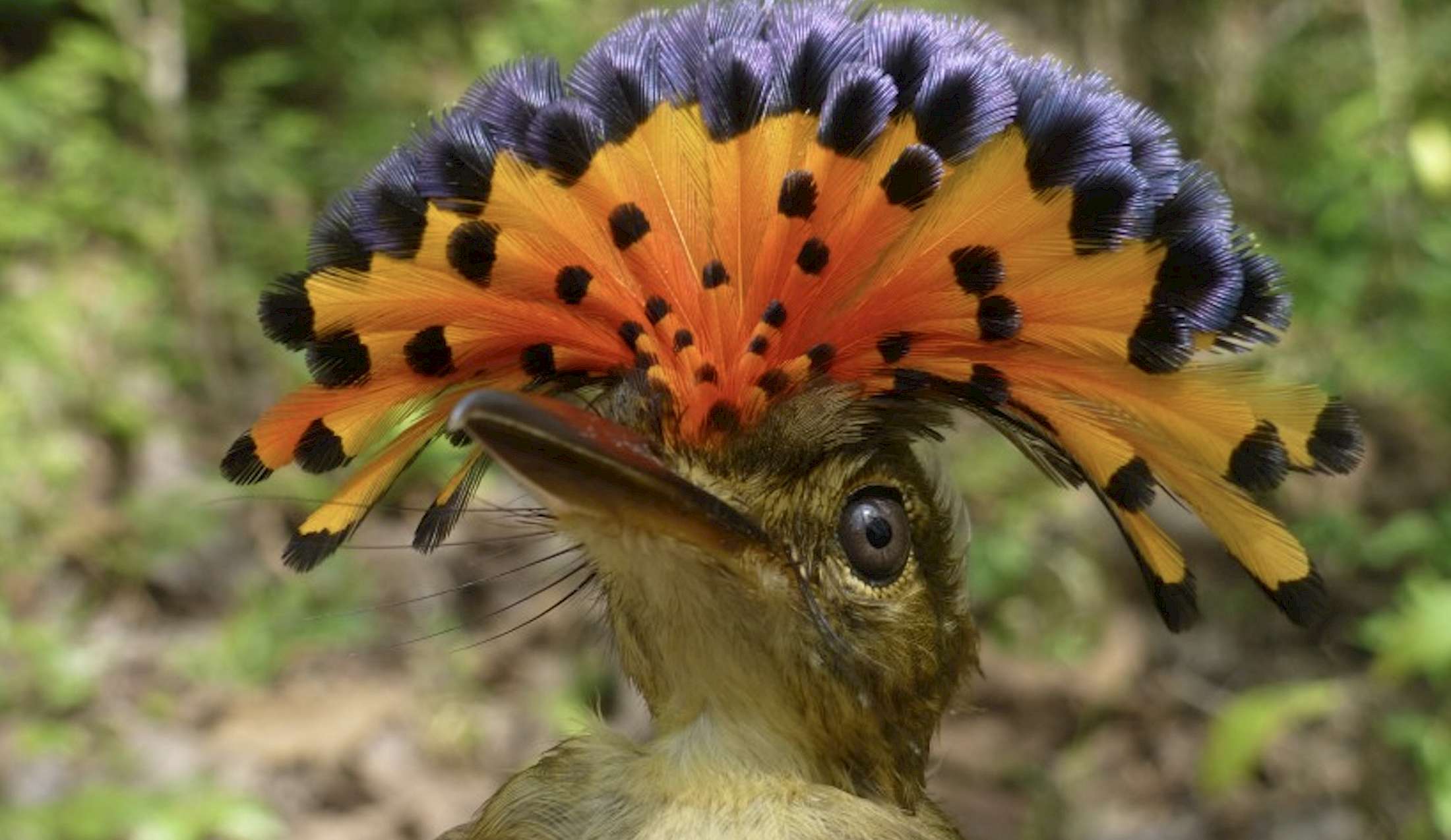
Meet the Amazonian Royal Flycatcher (Onychorhynchus coronatus)—a true showstopper of the rainforest canopy! This bird is impossible to forget, thanks to its dazzling, crown-like crest. Males sport an electrifying fan of fiery red-orange and deep blue-black, while females flash a brilliant yellow-orange during their mesmerizing mating displays. But these crests aren’t just for show—snap open that fan, and it just might scare off a lurking predator! Despite their flashy headgear, royal flycatchers blend right into the forest with their muted brown backs and yellow-washed bellies, making them expert hiders when danger is near. Want to spot one? Look for their remarkable nests, which dangle like ornaments over rivers and streams, keeping precious eggs safe from snakes and hungry birds. Usually seen solo or in pairs, you’ll often hear their haunting whistles echoing through the jungle. These birds are true locals, sticking to the Amazon Basin all year round in Brazil, Peru, Colombia, Bolivia, and Ecuador.
5) Toucan: An Amazonian Icon
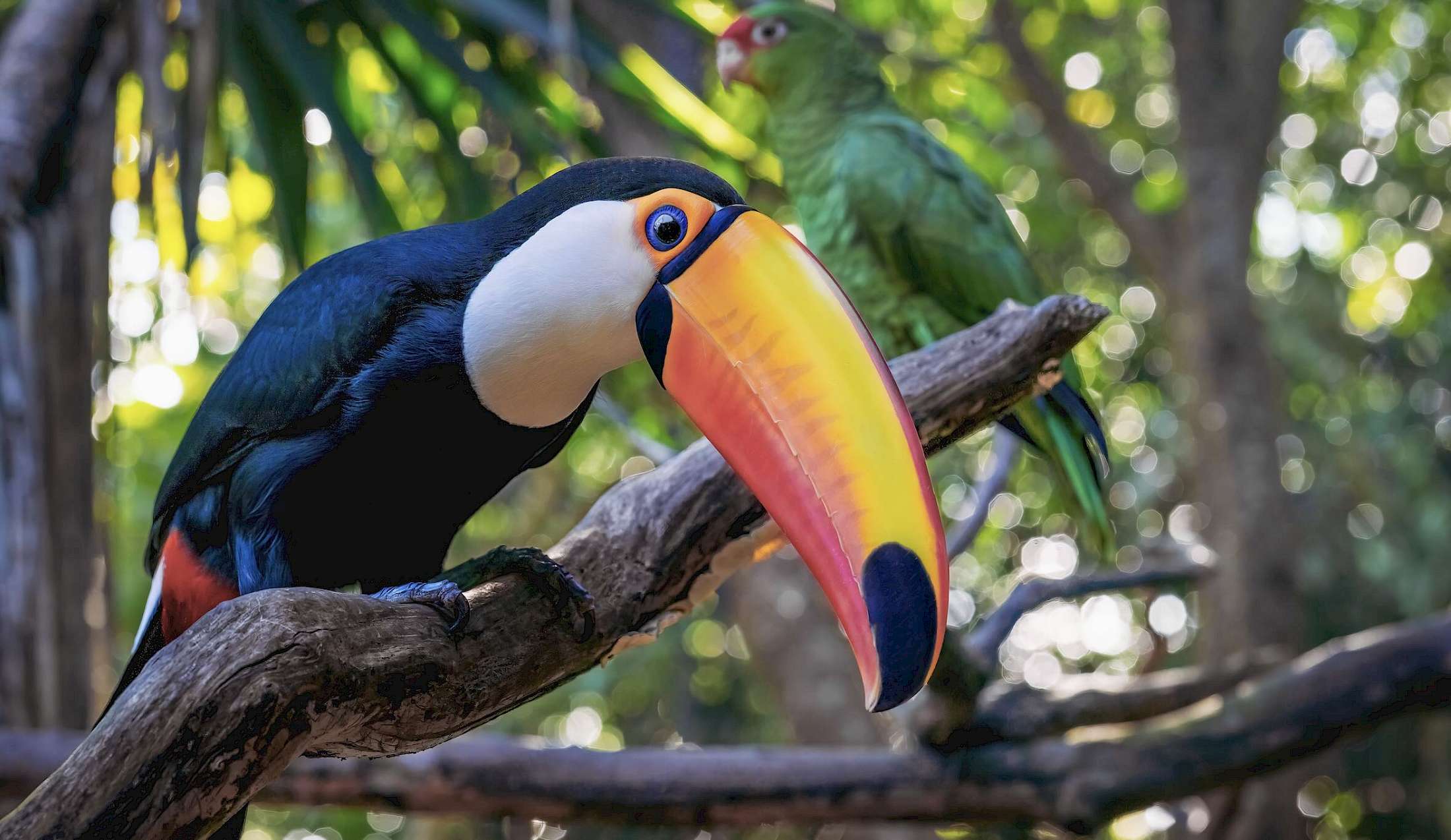
Meet the toucan: the Amazon’s most flamboyant resident, instantly recognizable by its oversized, rainbow-colored bill. The Keel-billed Toucan, the superstar of the family, shows off a beak splashed with green, blue, orange, and red. But that famous bill isn’t just for show—it helps toucans reach fruit, impress potential mates, fend off rivals, and even cool down by acting as a natural radiator! Toucans aren’t just eye-catching—they’re ear-catching too. In fact, they rank among the world’s loudest birds, filling the jungle with croaks, growls, and frog-like calls. Fun fact: the name “toucan” actually comes from the sounds they make! With over 40 species—including toucanets and aracaris—these birds are true rainforest socialites, gathering in lively flocks of up to 20. Despite being birds, toucans aren’t built for graceful flying. Instead, they prefer to hop acrobatically from branch to branch, rarely descending from the lush canopies of Central and South America. They make their homes in hollow tree trunks and spend their days playing, tossing fruit, and calling to one another. As dedicated fruit lovers, toucans do more than just snack—they help the rainforest thrive by spreading seeds wherever they go, making them essential players in the ecosystem’s health.
6) Paradise Tanager: A Living Rainbow
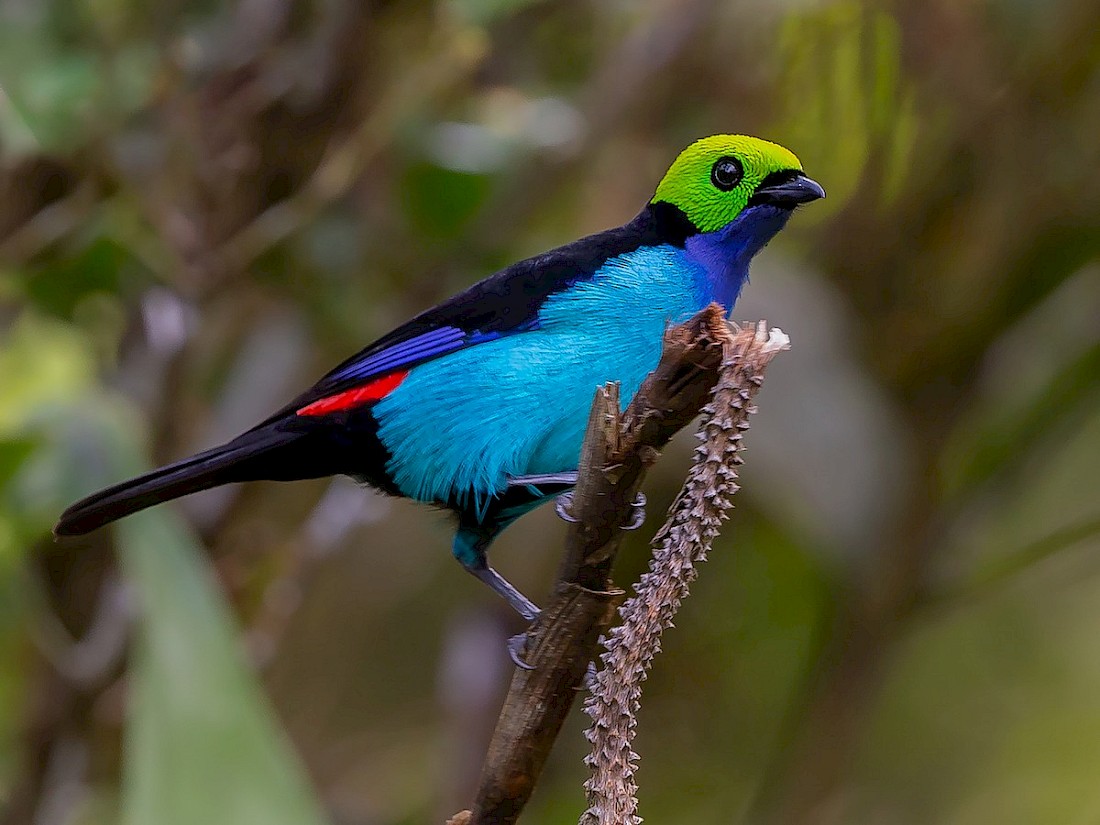
The Paradise Tanager displays an incredible mix of colors: a bright green head, sky-blue belly, black back, and a rump that is either red and yellow or all red—truly one of the rainforest’s most vibrant creations! Despite its scientific name Tangara chilensis, this bird isn’t found in Chile. It lives in the Amazon Basin in small flocks. It is best to look up because tanagers spend much of their time high in the rainforest canopy, making them a rare sight for ground-level observers. It’s a compact bird, measuring roughly 5.3 to 6 inches in length—but it’s big on visual impact with its dazzling plumage.
7) Blue Crowned Trogon: Royalty of the Rainforest
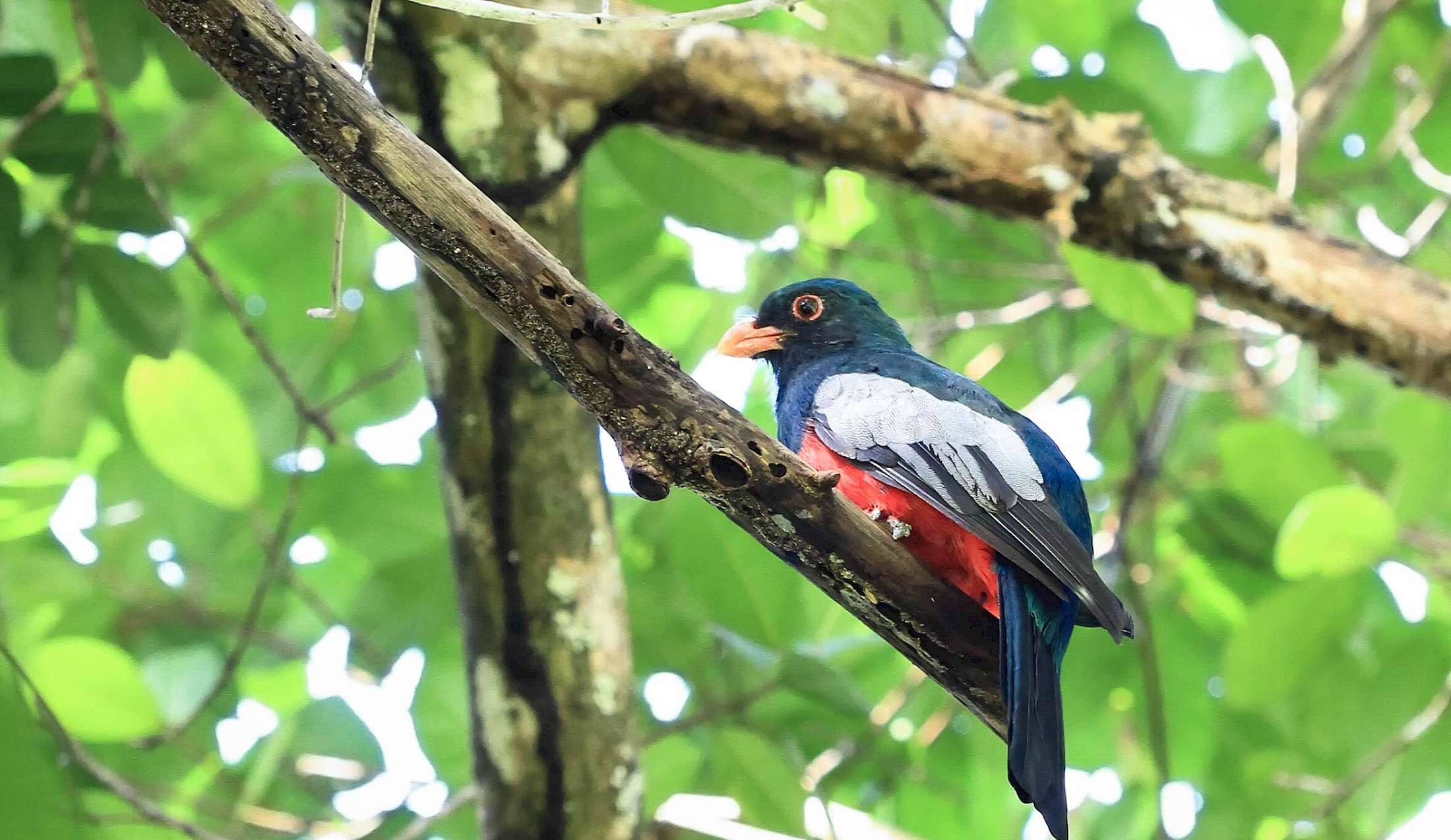
The Blue-Crowned Trogon (Trogon curucui) lives up to its name! The male dazzles with a shimmering blue-green crown, a metallic green back, and a rosy red belly bordered by a crisp white band. The female may be dressed in softer grays and blush tones, but she’s just as graceful. These birds are masters of patience, often sitting motionless on branches before zipping out to catch insects or snatch fruit. Their signature move, called “sallying,” is a quick, acrobatic dash to grab a meal and then a swift return to their perch. But perhaps their quirkiest trait is their choice of nursery: blue-crowned trogons often hollow out their nests inside active termite mounds high in the trees. The warmth from the termites helps keep their eggs cozy! Widespread across South America—from Brazil and Bolivia to Ecuador, Peru, Colombia, Argentina, and Paraguay- they thrive in everything from lush rainforests to dry savannas. Despite their brilliant plumage, spotting one isn’t easy. Their colors blend perfectly with the leafy canopy, and they sit so still that you’ll often hear their low, repetitive “kow-kow-kow” calls before you see them.
8) Amazonian Umbrellabird: Giants of the Amazon
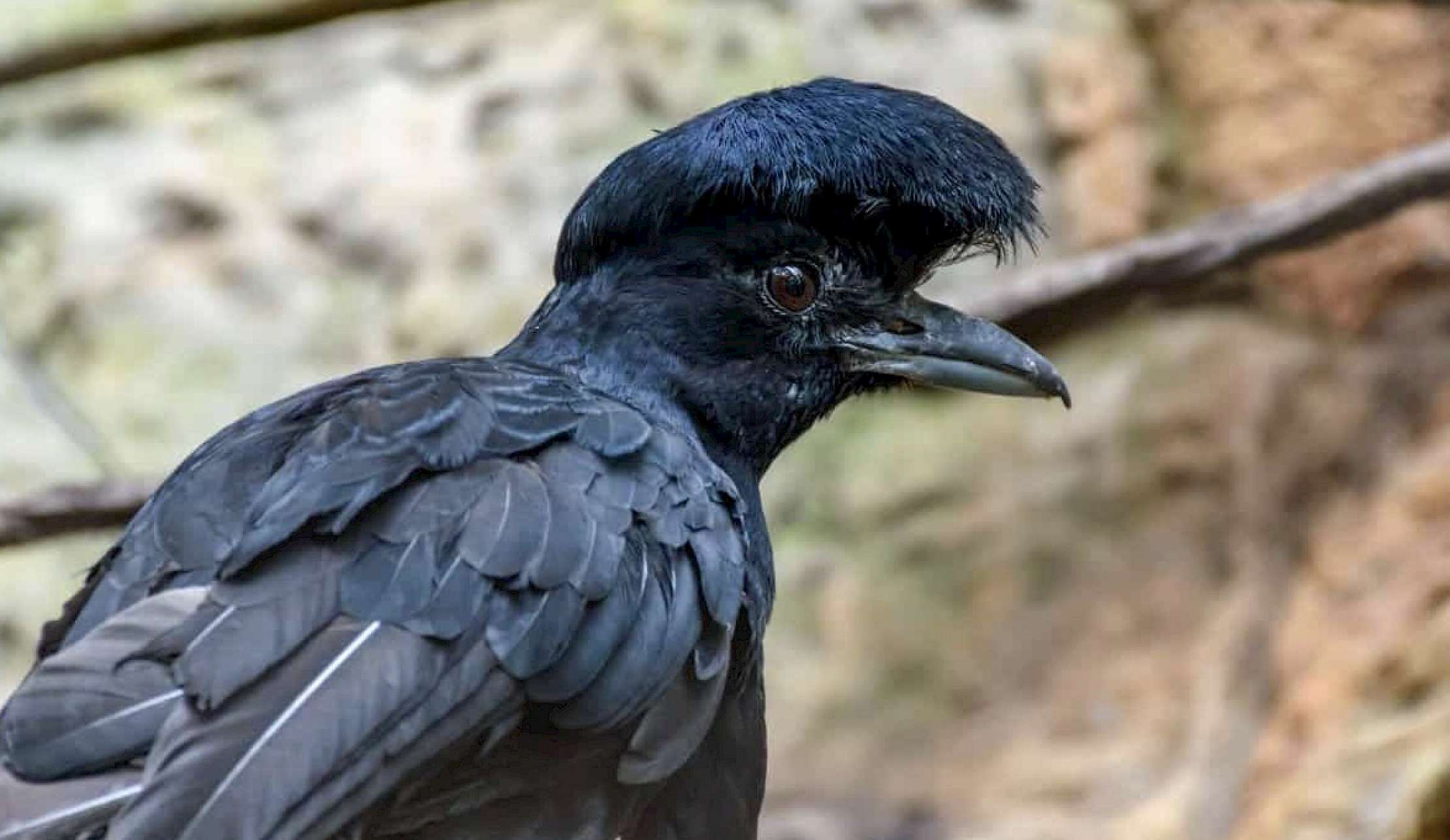
The Umbrellabird (Cephalopterus ornatus) is named for the umbrella-like crest of feathers that covers its beak. This striking crest, especially noticeable in males, can be raised or lowered. The male Amazonian umbrellabird is South America’s largest perching bird, reaching up to 22 inches and 1.26 pounds. Umbrellabirds are famous for their deep, booming calls, amplified by an inflatable throat wattle, to attract females during mating displays. They mainly eat fruit but also snack on insects, frogs, and small animals, making them true omnivores. These birds migrate short distances within the Amazon rainforest, usually to follow food. Males gather at communal spots called leks to display their crests, wattles, and powerful calls, while females choose mates and later handle all nesting duties. Sadly, due to habitat loss, the Amazonian umbrellabird is now rare in the wild, drawing attention from researchers and conservationists.
9) Amazonian Kingfisher: A River Resident
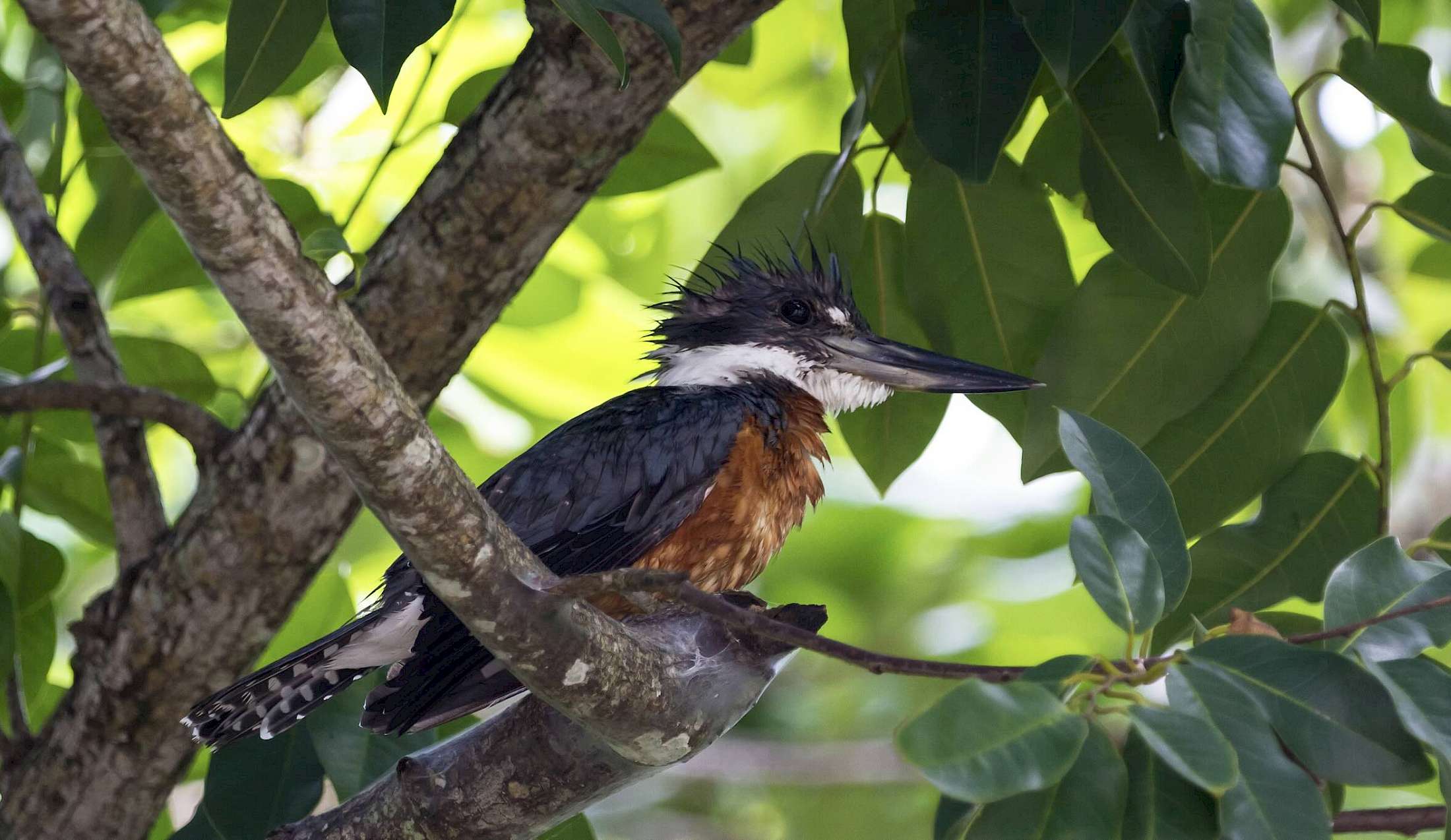
The Amazonian Kingfisher (Chloroceryle amazona) is a dazzling bird dressed in shimmering green, with crisp white underparts and, for the males, a bold reddish chest band. This striking plumage lets it blend into the lush jungle while still turning heads during courtship. An ace flyer, the Amazonian kingfisher zips through rivers and rainforests with impressive speed and agility, always on the lookout for its next meal. With a lightning-fast dive and a powerful beak, it snatches fish from the water with pinpoint accuracy. And while fish are its favorite, it won’t say no to a crunchy crustacean, a tasty insect, or even a small amphibian. Fiercely territorial, these skilled hunters guard their fishing spots from rivals. When it’s time to nest, they become expert engineers, tunneling deep into riverbanks to create safe, hidden homes that protect their eggs from both predators and floods. Spotting a kingfisher is a sign of a healthy river—these birds are so sensitive to pollution that their presence means the ecosystem is thriving. In Amazonian folklore, the kingfisher’s song is said to predict rain, bring good luck, and even hold magical powers.
10) Amazonian Motmot: Secretive and Serene
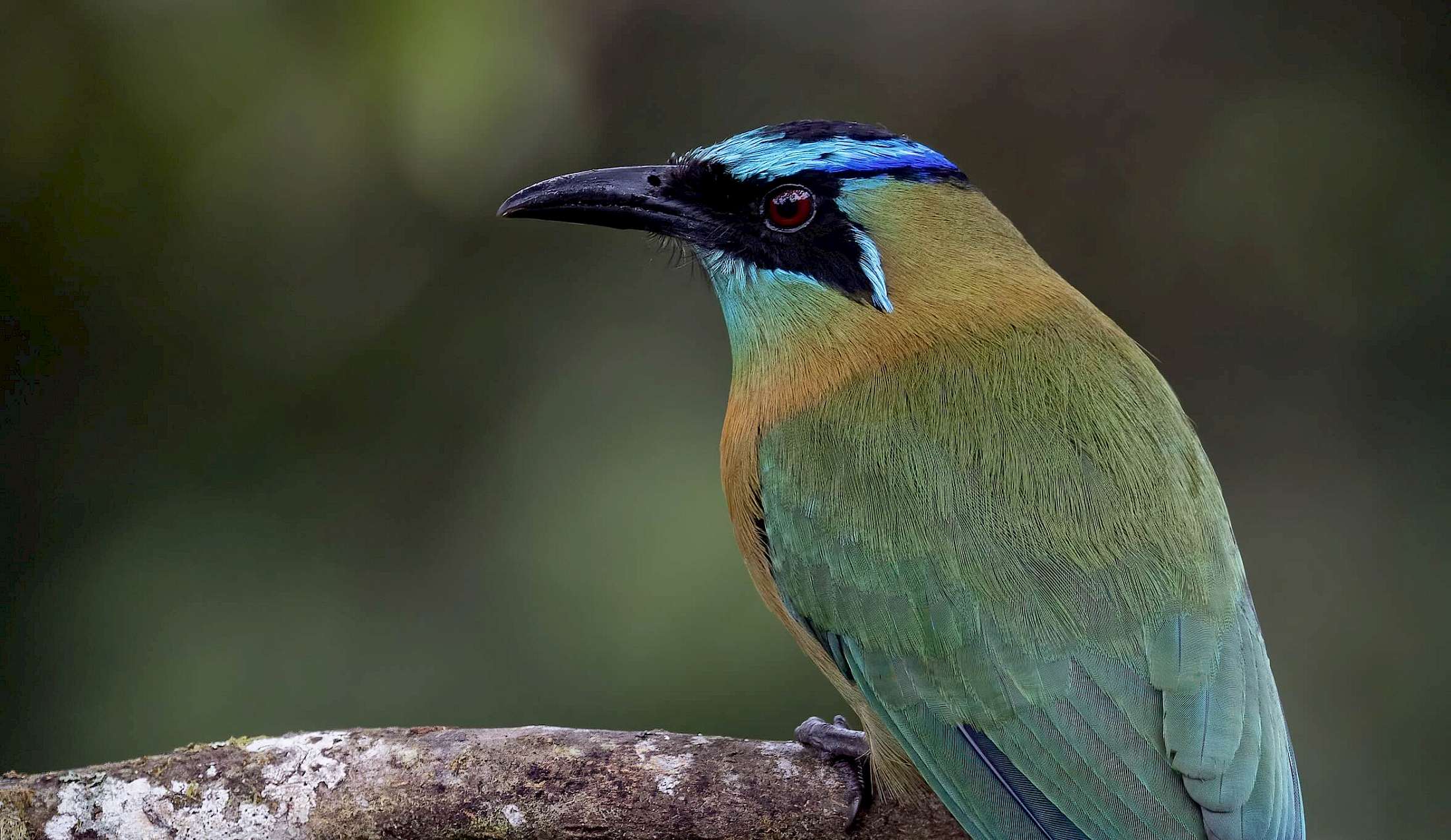
The Amazonian Motmot (Momotus momota) is instantly recognizable by its unique racquet-shaped tail feathers. This bird looks like it’s carrying tiny paddles behind it, thanks to naturally bare tips on its central tail feathers. Dressed to impress, the Motmot flashes vibrant green plumage, a bold black crown bordered by an electric blue band, and a chestnut nape—perfect camouflage among the rainforest’s dazzling colors. A master of adaptability, the Motmot dines on everything from insects and fruit to small reptiles and mammals. When it comes to nesting, this bird prefers privacy: it carves out long tunnels in earth banks, often hidden along steep slopes or forest edges. Unlike many tropical birds, Motmots are homebodies. They stay put in their Amazonian territories year round, most often glimpsed alone or in pairs, moving quietly through the trees. Instead of loud chatter, they announce their presence with a mysterious double hoot, similar to that of an owl. And if you’re lucky enough to spot one, you’ll notice they’re impressively large for a treetop dweller, stretching up to 19 inches long!
11) Jabiru Stork: Graceful Giants
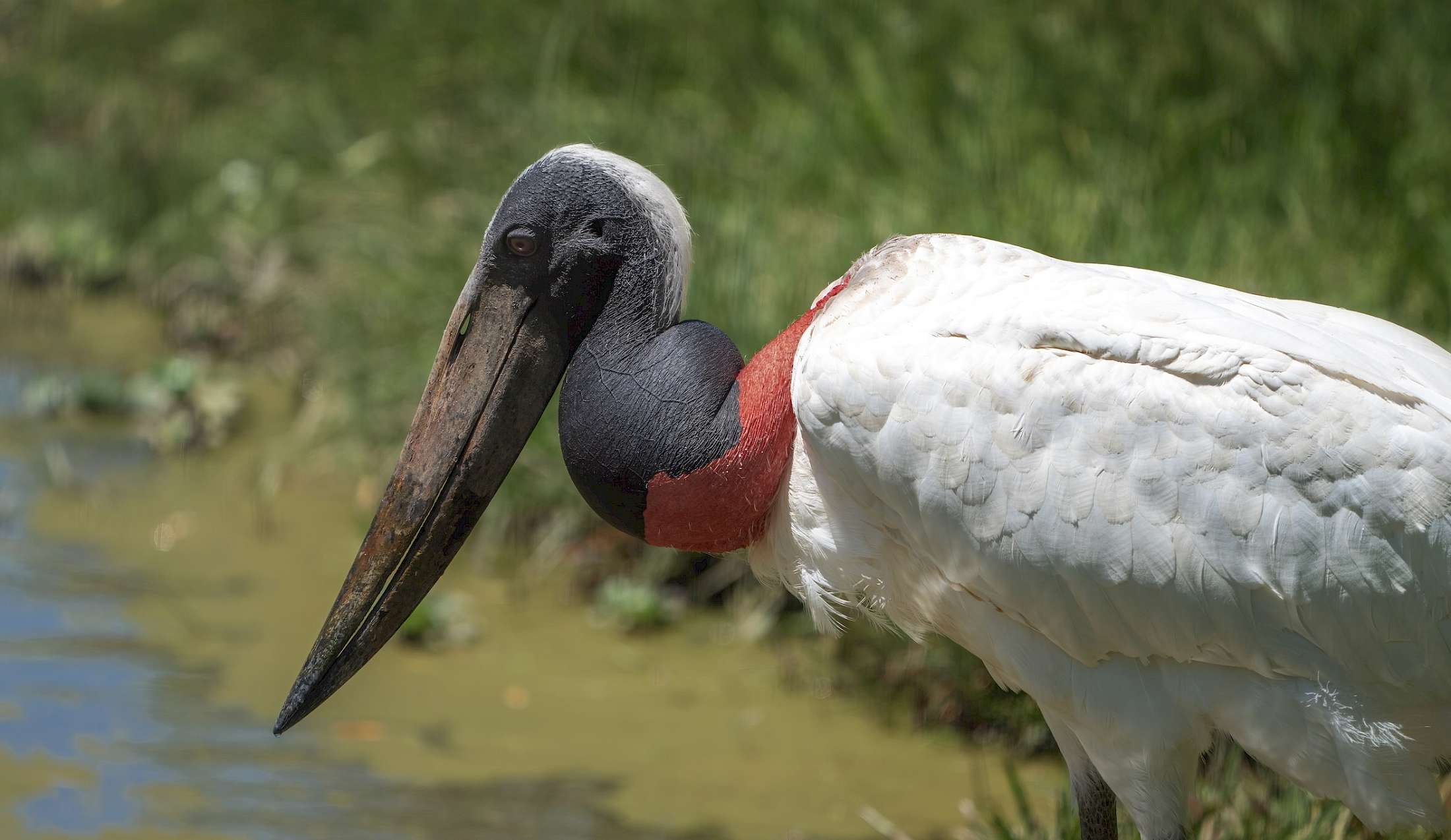
The Jabiru Stork (Jabiru mycteria) is the tallest flying bird in Central and South America! Towering at 4.6 feet (140 cm) with a wingspan stretching over 9 feet (2.8 meters), it’s second in size only to the mighty Andean condor. One of the Jabiru’s most striking features is its inflatable neck pouch. Usually pink, it turns a brilliant scarlet when the bird is excited, angry, or just showing off. As avid scavengers, Jabirus clean up waterways by feasting on carrion, especially during the dry season. Their extra-large, sensitive beaks are perfect for sensing prey hidden in muddy water, making slippery fish and sneaky amphibians their specialty. Jabirus are loyal partners, often mating for life and reusing their massive nests year after year. Both parents invest months raising their chicks—laying 2 to 5 eggs and caring for their young for up to six months, which is so demanding they often skip a year before breeding again. But life in the wetlands comes with a little drama! Up to 10% of Jabiru nests have chicks fathered by someone outside the pair, and when food is scarce, Jabirus have been known to steal meals from neighbors—even from each other!
12) Blue and Yellow Macaw: Jewels of the Rainforest
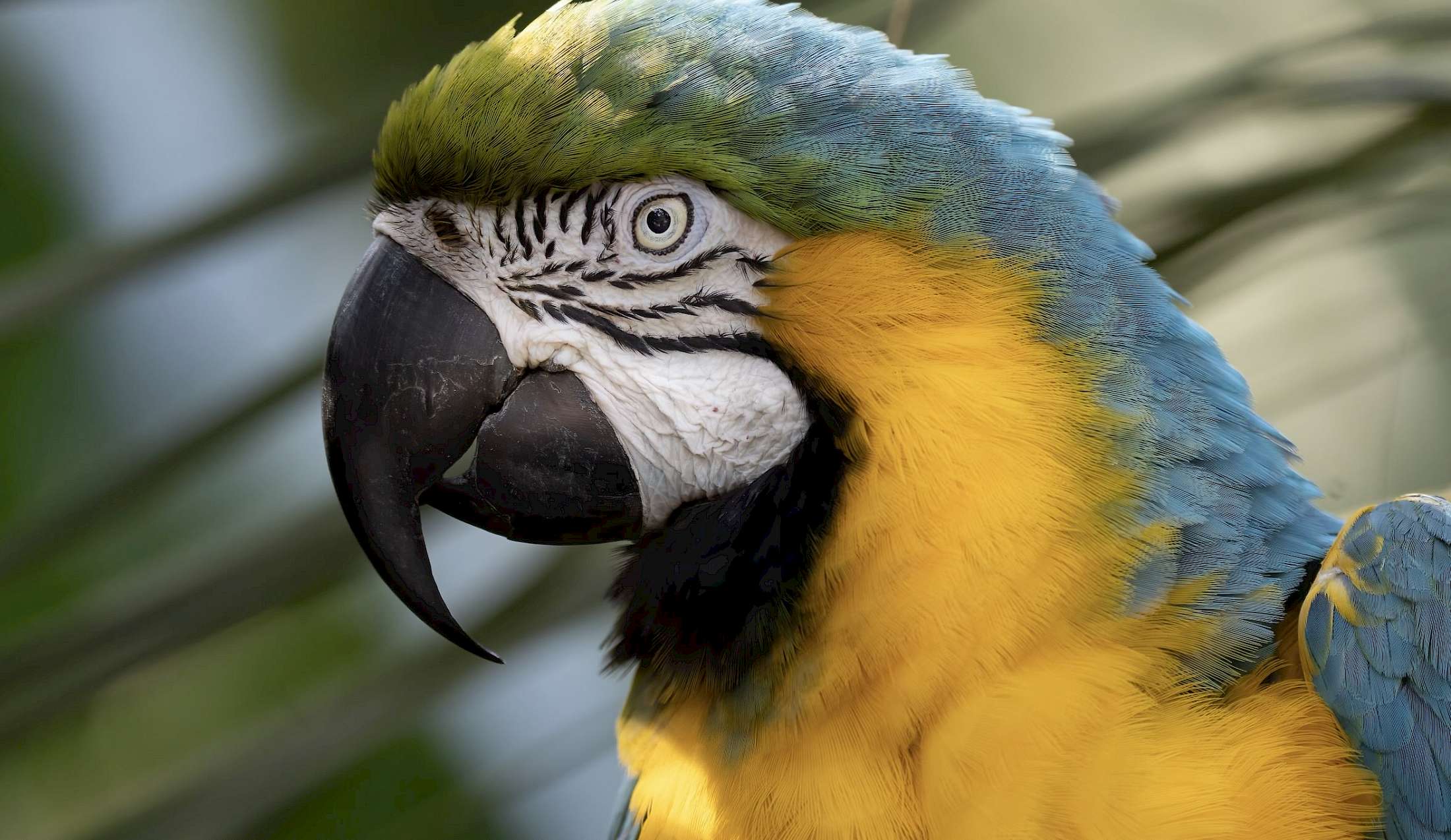
The Blue-and-Yellow Macaw (Ara ararauna) is one of the most colorful and charismatic birds living in the Amazon Rainforest. Its bright blue wings and back, paired with a golden-yellow chest, make it truly eye-catching. This vivid coloring actually helps the macaw blend into the rainforest canopy. These parrots have strong, curved beaks that can crack open tough nuts like coconuts and Brazil nuts. Blue-and-yellow macaws are monogamous and form lifelong bonds, often seen grooming, sharing food, and flying together in perfect sync. They are also excellent mimics, able to copy human speech and other sounds. Their intelligence and vocal talents make them popular—but noisy—pets. They’re among the largest parrots, growing up to 3 feet long with a wingspan of 4 feet. In the wild, they can fly up to 15 miles a day searching for food. Wild macaws live up to 60 years, but with good care in captivity, some reach 80 to 100 years. Social by nature, they fill the rainforest with joyful, boisterous calls, keeping in touch with their flock across the dense jungle. Native to the treetop canopies of Brazil, Venezuela, Trinidad, and beyond, these vibrant birds are truly the life of the rainforest party!
Birdwatching Packing List
For bird lovers, tropical rainforests are a paradise. Whether you’re cruising rivers, hiking jungle trails, or relaxing at an eco-lodge, you’ll find endless opportunities to spot amazing birds. Central and South America offer some of the world’s best birdwatching, thanks to their rich rainforests and diverse wildlife.
Essential Birding Gear
- Waterproof binoculars (8×42 or 10×42 recommended)
- Bird field guide
- Notebook or birding app (eBird or Merlin) for recording sightings
- Camera with zoom lens (optional but great for rare captures)
Clothing & Footwear
- Lightweight, long-sleeved shirts & pants (breathable, light-colored fabric)
- Wide-brimmed hat for sun protection
- Comfortable hiking boots or walking shoes (preferably waterproof)
- Moisture-wicking socks to prevent blisters and keep feet dry
- Rain poncho or packable rain jacket (crucial for sudden downpours)
- Bandana or buff (for sweat or to double as dust/insect protection)
Protection & Health
- DEET-based insect repellent or natural alternatives like citronella
- Sunscreen (reef-safe and sweat-resistant)
- Personal first-aid kit
- Antihistamines, pain relievers, and anti-diarrheal meds
- Reusable water bottle or hydration pack
- Electrolyte packets for hydration
Join Tours of Distinction on a guided tour with expert ornithologists who know the local birds inside and out. They’ll help you find and identify many species, while sharing fascinating facts about their behavior, habitats, and conservation.